





Key Takeaways
- Kinesiology tape is widely used in weightlifting contexts to support training, manage fatigue and discomfort, and provide sensory feedback that may help with movement awareness and endurance. Usage spans both general strength training and competitive lifting.
-
Some recent evidence supports tape’s role in improving muscle function and strength recovery after fatigue, particularly when muscles are compromised by prior exertion, and suggests potential neuromuscular modulation effects in specific populations.
- Limited RCT evidence in elite weightlifting populations shows minimal impact on classic power measures (countermovement jump, estimated peak power), but horizontal jump distances improved in the experimental tape group in one trial.
- Practically, kinesiology tape’s most reliable roles in weightlifting are related to sensory support, proprioceptive feedback, and adjunctive use with training protocols, rather than as a standalone performance enhancer.
Tape In The Weight Room
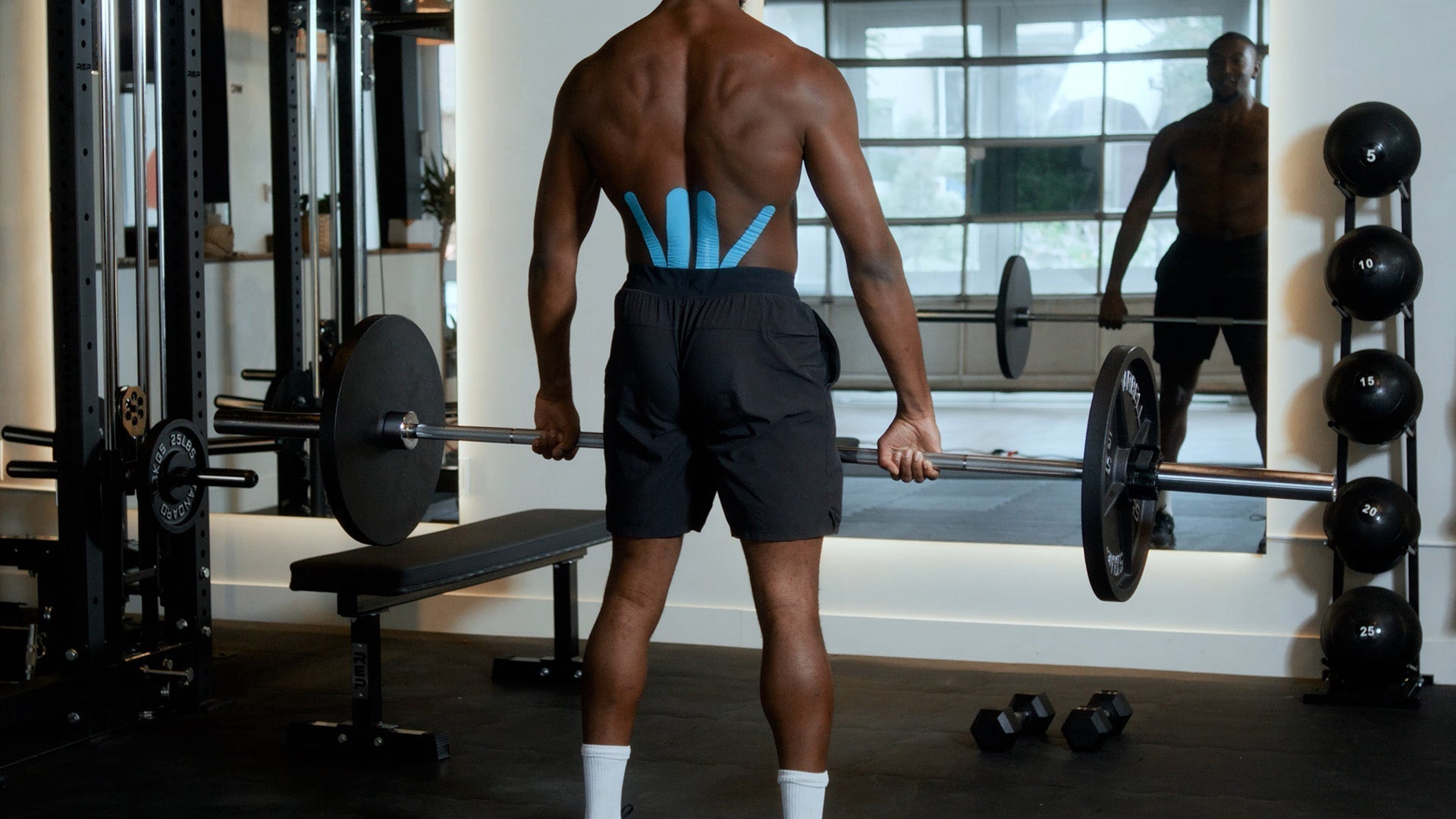
Weightlifters, whether training recreationally, for strength sports, or for competitive Olympic lifting, continually seek legal, non-pharmacologic ways to gain performance edge, manage fatigue, and prevent injury. Kinesiology tape has gained traction in these settings due to its elastic design, allowing movement and providing light sensory input without restricting motion. In lifting contexts, athletes and clinicians deploy tape to support muscle groups, enhance proprioceptive feedback during complex lifts, and potentially reduce fatigue-related performance decrements. But what does up-to-date scientific research actually show about these uses?
1. Fatigue, Performance Recovery, And Functional Output
Emerging research suggests kinesiology tape's benefits in contexts involving fatigue or functional performance:
- A systematic review and meta-analysis on lower limb kinesiology taping demonstrated that tape significantly enhanced muscle strength when muscles were compromised by fatigue and reduced pain related to fatigue across multiple studies. The effect remained over immediate to beyond 48-hour timeframes.
- A 2024 randomized trial found that kinesiology tape improved muscle strength and proprioception after eccentric muscle fatigue, compared with other taping conditions, emphasizing tape’s utility in fatigue recovery protocols.
This evidence supports a nuanced view that tape may help mitigate fatigue-induced performance declines that commonly occur during high-volume strength training or multi-set lifting sessions.

2. Evidence From Weightlifting-Specific Research
The most directly related controlled trial in strength sport settings evaluated elite weightlifters:
- In a 2021 RCT, researchers investigated the effects of kinesiology tape on performance measures including vertical jump height, horizontal jump distance, and estimated peak power. Results indicated a significant improvement in horizontal jump distance in the taped group, while vertical jump and estimated peak power did not differ significantly between tape and sham conditions.
While this study suggests limited performance changes, the improvement in horizontal jump distance indicates possible functional or neuromuscular effects in highly trained lifters that may relate to movement control, proprioceptive feedback, or fatigue resistance mechanisms rather than pure muscular force increases.

3. How Tape Might Function In Lifting Contexts
Although direct evidence for strength or power enhancements is limited, several biologically plausible mechanisms help explain why weightlifters and clinicians still find value in kinesiology taping:
Sensory Feedback And Proprioceptive Cues
Taping provides continuous cutaneous stimulation that can increase sensory awareness of movement patterns. This may help lifters maintain technique during complex or rapid lifts where joint position sense and motor control are critical.
Neuromuscular Modulation After Fatigue
As seen in fatigue-related research, kinesiology tape may assist with muscle strength recovery and proprioceptive feedback following eccentric loading, which is relevant for high-volume and high-intensity lifting sessions where central and peripheral fatigue accumulate.
Psychological And Confidence Effects
While not a physiological mechanism per se, many athletes report feeling “more supported” or confident when taped, a factor that can contribute indirectly to performance consistency and effort even when measurable strength doesn’t change.

4. Practical Use Cases In Weightlifting
Given the evidence landscape, practical, evidence-informed weightlifting applications for Spidertech include:
Pre-Training Support
Applying tape before sessions that involve heavy lifts, fatigue protocols, or dynamic compound movements may provide proprioceptive cues that help lifters maintain alignment and technique.
Post-Fatigue Recovery
Following intense training sessions (e.g., squats, deadlifts, accessory work), tape may contribute to reduced soreness and preserved neuromuscular feedback, potentially aiding recovery between sessions.
Technique Reinforcement
When used strategically with cueing (e.g., on shoulders during pressing patterns, around scapular stabilizers, or along trunk musculature), tape can act as a sensory reference for movement quality that complements coaching feedback.
5. Limitations Of Current Research
When interpreting the evidence, several limitations are important to consider and should be relayed to clinicians and patients accordingly:
- Population definitions vary across studies, and many do not isolate trained weightlifting athletes exclusively.
- Outcome measures differ (e.g., balance, jump height, EMG signals, torque), making direct comparisons challenging.
- Evidence for isolated strength or power gains is weak, particularly in healthy, trained individuals performing maximal lifts.
- Field applications (e.g., competition versus lab tests) might yield different effects due to psychological and contextual factors not captured in controlled trials.
Bottom Line
Kinesiology tape is not a magic strength booster for weightlifters, and current up-to-date evidence shows no consistent increases in maximal muscle strength or typical resistance measures when tape is used in isolation. However, several clinically relevant benefits emerge from research and practical experience:
- Tape may enhance strength and function after fatigue and complement recovery processes, which is particularly applicable during intense training blocks.
- It may provide proprioceptive and neuromuscular cues that help lifters maintain technique under load and fatigue.
- Weightlifters may experience functional performance improvements (e.g., horizontal jump distances) in targeted contexts, though more research is needed.
Used thoughtfully alongside structured training, technique coaching, and recovery strategies, kinesiology tape remains a practical adjunct tool in weightlifting, not a standalone performance enhancer.
Learn More
Our comprehensive Skool platform covers taping techniques as well as free webinars that go over taping efficacy. Sign up for free and start taking advantage of our courses.
References:
- Does lower limb kinesio taping affect pain, muscle strength, and balance following fatigue in healthy subjects? A systematic review and meta analysis of parallel randomized controlled trials
- The effect of the Kinesio Tape on the muscle power performance of elite weightlifters
- Does kinesio tape alter muscle strength in athletes? - Systematic review and meta-analysis
- Immediate effect of kinesiology taping on muscle strength, static balance and proprioception after eccentric muscle fatigue on ankle: a randomized cross-over trial
Share:
How Spidertech Improves Proprioception: Evidence, Mechanisms, and Clinical Use
Pre-Cut Solutions Versus Custom Kinesiology Taping Patterns