





Key Takeaways
- Kinesiology tape is commonly used in clinical settings to support pain reduction, functional improvement, proprioception, and performance in a variety of foot-related injuries such as plantar fasciitis, ankle sprains, Achilles tendinopathy, hallux valgus, and turf toe.
- Randomized clinical trials indicate that kinesiology tape combined with physical therapy can reduce pain and improve foot function and dynamic balance in plantar fasciitis more than conservative therapy alone, and dynamic taping may exceed kinesiology tape in some functional outcomes.
- Evidence supports the role of taping in neuromuscular control and functional gait parameters in chronic ankle instability, with systematic reviews and trials showing improved dynamic postural control and gait function, though not universally better than exercise alone.
- In conditions such as hallux valgus, kinesiology taping has shown promising effects on foot biomechanics, loading patterns, and pain reduction in both short-term and pilot studies.
- Mechanistically, kinesiology taping may augment sensory feedback, proprioceptive input, and dynamic support without restricting motion, but evidence for static foot posture or plantar pressure changes is limited or mixed.
Foot Injuries — Prevalence And Clinical Impact
Foot-related conditions such as plantar fasciitis, Achilles tendinopathy, ankle sprains, hallux valgus (bunions), and turf toe represent a significant portion of musculoskeletal presentations in physiotherapy, chiropractic, and soft tissue therapy practices. These conditions can disrupt gait mechanics, reduce balance and mobility, and increase injury risk if not addressed comprehensively.
Clinicians commonly use kinesiology tape to assist with pain modulation, enhance sensory input, and support movement patterns during rehabilitation. While kinesiology tape is not a standalone cure, clinical evidence supports its role as an effective adjunctive tool within broader conservative management strategies.
Common Foot Injuries And How Kinesiology Tape Is Used
1. Plantar Fasciitis
Overview:
Plantar fasciitis involves micro-tears, inflammation, or degeneration of the plantar fascia, the connective tissue supporting the medial longitudinal arch of the foot. It is frequently encountered in runners, athletes, and individuals with prolonged standing activities.
Research Evidence:
- In a randomized clinical study examining plantar fasciitis patients, both kinesiology tape and athletic tape applied with physical therapy led to significant improvements in pain, foot function index (FFI), and dynamic balance (Y-Balance Test) compared with conservative therapy alone.
- A separate randomized controlled trial specifically found that kinesiology tape significantly reduced pain compared with sham taping when worn for up to five days, with the largest pain differences observed at day two.
Clinical Application:
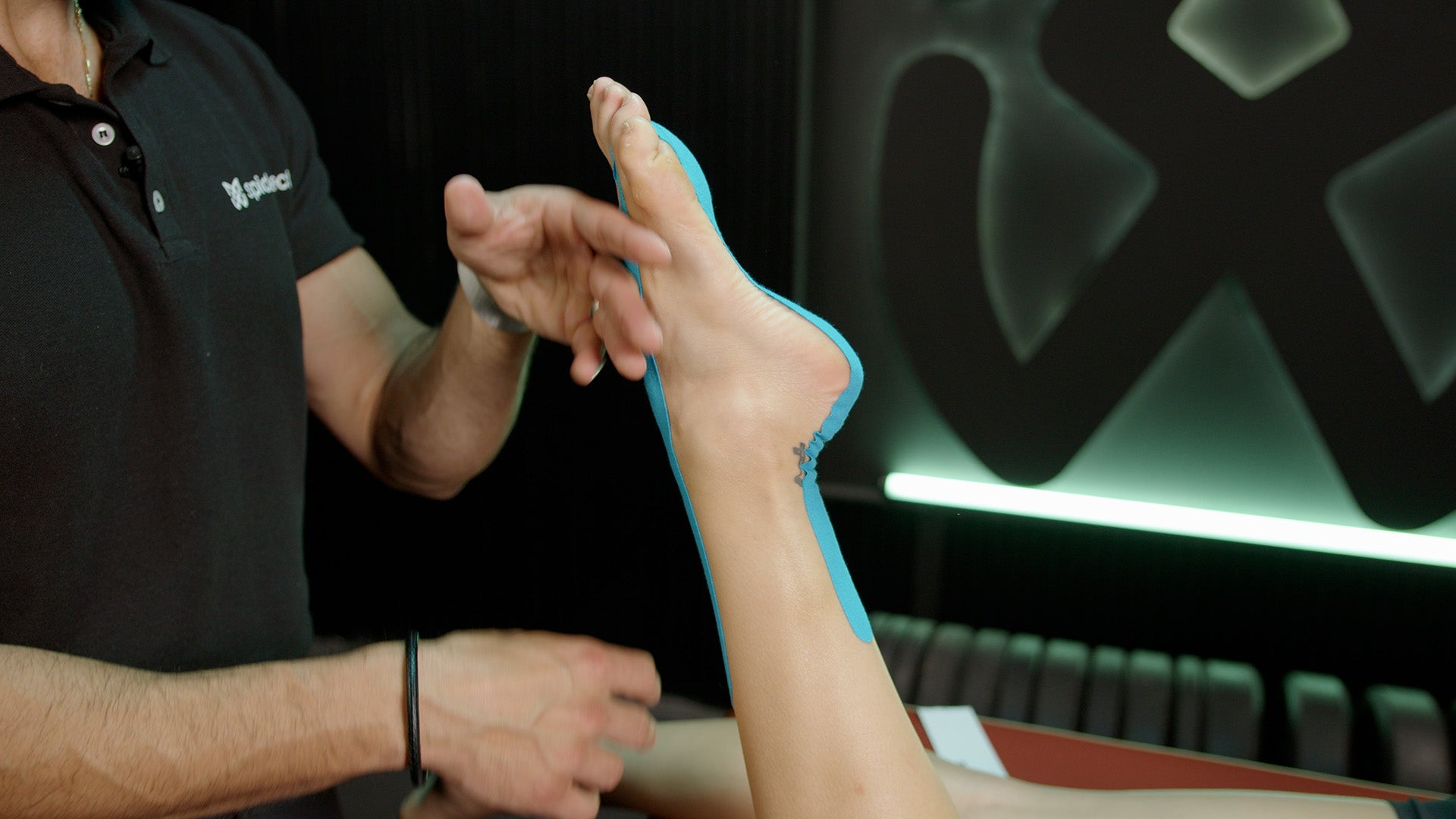
Typical tape patterns for plantar fasciitis involve longitudinal strips from the calcaneus to the metatarsal heads to support the arch and offload the plantar fascia. Taping works well when integrated with stretching, foot intrinsic strengthening, and gait retraining.

2. Ankle Sprains And Chronic Instability
Condition Overview:
Lateral and medial ankle sprains are common acute injuries in sport and daily life. Incomplete rehabilitation can lead to chronic ankle instability (CAI), characterized by perceived instability, postural control deficits, and altered gait mechanics.
Research Evidence:
- A systematic review and meta-analysis on kinesiology taping for athletes with CAI reported a moderate stabilizing effect, including improvements in gait function, range of motion control, muscle activation, and postural sway, particularly in dynamic conditions.
- A repeated measures laboratory study found that kinesiology taping significantly improved ankle inversion proprioceptive performance during landing tasks in individuals with and without chronic ankle instability, with longer tape length yielding greater proprioceptive enhancement.
Clinical Application:
For ankle instability presentations, lateral and medial taping patterns, such as figure-of-eight or balance taping configurations, can be used to enhance sensory feedback and dynamic stability during gait and functional tasks.
3. Achilles Tendinopathy
Condition Overview:
Achilles tendinopathy stems from repetitive overuse and tissue overload of the Achilles tendon, commonly affecting runners, jumpers, and athletes with high training volumes.
Research Evidence:
Emerging trials on traditional athletic taping (anti-pronation and anti-supination techniques) in recreational athletes with Achilles tendinopathy report improvements in proprioceptive accuracy and functional performance parameters, though specific evidence on elastic kinesiology tape remains limited.
Clinical Application:
In practice, taping strategies for Achilles tendinopathy aim to augment sensory feedback, modulate loading patterns, and support neuromuscular control while preserving tendon mobility and facilitating exercise-based rehabilitation.

4. Hallux Valgus (Bunion) And Foot Posture
Condition Overview:
Hallux valgus describes a lateral deviation of the big toe at the first metatarsophalangeal joint, leading to pain, altered foot biomechanics, and pressure changes during gait.
Research Evidence:
- In a study examining foot biomechanics in hallux valgus patients, kinesiology taping significantly altered dynamic foot loading parameters, suggesting mechanical effects on gait and forefoot loading distribution.
- Extended use of kinesiology taping over a month reduced the hallux valgus angle and significantly decreased foot pain while altering foot anthropometric measures and plantar pressure distribution.
- A case report demonstrated that daily balance taping for three months decreased both hallux valgus angle and intermetatarsal angle and improved pain and functional walking ability.
Clinical Application:
Taping patterns for hallux valgus are applied across the first MTP joint and forefoot to offload the medial forefoot, support toe alignment, and afford symptomatic relief, often as a conservative alternative where surgery is contraindicated.
5. First Metatarsophalangeal (MTP) Sprain (Turf Toe)
Condition Overview:
Turf toe is a hyperextension injury of the first MTP joint, commonly seen in athletes performing rapid accelerations or cutting movements.
Research Evidence:
- A 2024 randomized clinical trial found that kinesiology taping used alongside an exercise program significantly reduced pain, improved gait characteristics (step length, stride, velocity), and enhanced functional measures (6MWT) compared with placebo taping and exercise alone.
Clinical Application:
Taping for turf toe focuses on limiting excessive dorsiflexion of the first MTP joint while allowing functional movement, supporting pain reduction and participation in gait and rehabilitation activities.
Mechanisms By Which Kinesiology Tape May Help Foot Injuries
Although specific mechanistic evidence is still developing, several clinically plausible effects support tape use in foot injury rehabilitation:
- Sensory feedback augmentation: Tape may increase cutaneous mechanoreceptor input that enhances proprioception and movement awareness, beneficial in conditions like chronic ankle instability.
- Pain modulation: Kinesiology tape may alter perceived pain through afferent modulation and sensory stimulation, as shown in plantar fasciitis outcomes.
- Dynamic load distribution: Strategic application can redistribute forces across the foot and joints, reducing stress on painful tissues (e.g., plantar fascia, hallux MTP joint) during gait.
- Functional support without restriction: Unlike rigid taping, kinesiology tape allows full range of motion while providing sensory cues that support gait and activity participation.
However, evidence for changes in static foot posture or plantar pressure has shown limited effects, with some studies finding no significant changes in plantar pressure or static foot alignment after taping.

Clinical Guidance: How to Integrate Kinesiology Taping for Foot Injuries
Assessment And Individualized Plan
- Conduct a comprehensive functional assessment of gait, balance, foot posture, and symptomatic triggers.
- Base taping patterns on specific movement dysfunctions and clinical goals rather than using generic applications.
Taping Techniques By Condition
- Plantar fasciitis: Longitudinal arch support from heel to forefoot with moderate tension.
- Ankle instability/sprains: Figure-of-eight or balance taping around the ankle to enhance proprioceptive feedback.
- Achilles tendinopathy: Long strips along the Achilles corridor to augment sensory input during motion.
- Hallux valgus: Tape applied to encourage first toe alignment and redistribute forefoot load.
- Turf toe: Taping that limits first MTP hyperextension while maintaining functional push-off.
Combine With Active Therapy
Use Spidertech kinesiology taping as an adjunct to therapeutic exercise, manual therapy, and functional retraining to maximize outcomes.
Durating & Monitoring
- Tape can be worn for several days as tolerated, with careful monitoring for adhesion issues or skin irritation.
- Document outcomes (e.g., pain scales, balance assessments, gait measures) to evaluate effectiveness and guide subsequent interventions.
Understanding Limitations And The Evidence Landscape
- RCTs and clinical studies support positive short-term outcomes for pain and function in plantar fasciitis and turf toe, and biomechanical effects in hallux valgus, but evidence quality and consistency vary by condition.
- Some research shows minimal changes in static foot posture or plantar pressures after kinesiology taping, indicating that tape may be better at influencing sensory feedback than altering structural biomechanics directly.
- Systematic reviews generally note that while taping can be beneficial as an adjunct, exercise and proprioceptive training remain core components of foot injury rehabilitation.
Bottom Line
Spidertech Kinesiology tape is a valuable adjunctive tool in the conservative management of foot-related issues and injuries when used within a structured, evidence-informed clinical framework. Research supports its role in pain reduction, functional improvements, proprioceptive enhancement, and gait outcomes in conditions such as plantar fasciitis, chronic ankle instability, turf toe, and hallux valgus. Clinicians should integrate kinesiology taping with active rehabilitation, manual therapy, and patient-specific assessments to achieve the best outcomes while recognizing that evidence varies by condition and outcome measure.
Learn More
Our comprehensive Skool platform covers taping techniques as well as free webinars that go over taping efficacy. Sign up for free and start taking advantage of our courses.
References:
- Effect of Dynamic Taping versus Kinesiology Taping on Pain, Foot Function, Balance, and Foot Pressure in 3 Groups of Plantar Fasciitis Patients: A Randomized Clinical Study
- Is Kinesio Taping Effective for Sport Performance and Ankle Function of Athletes with Chronic Ankle Instability (CAI)? A Systematic Review and Meta-Analysis
- From injury to rehabilitation: How kinesiology taping helps patients with first metatarsophalangeal joint sprain (turf toe) in pain reduction, gait parameters and functional ability improvement. A randomized clinical trial
- The short-term effectiveness of Kinesiology Taping on foot biomechanics in patients with hallux valgus
- THE EFFECT of KINESIO TAPE® on STATIC FOOT POSTURE, PLANTAR PRESSURE, and REARFOOT MOTION in INDIVIDUALS with PRONATED FEET
- Effects on pain of kinesiology tape in patients with plantar fasciitis: a randomized controlled study
- Kinesiology tape length and ankle inversion proprioception at step-down landing in individuals with chronic ankle instability
- The Effects of Kinesio Tape on Actue Ankle Sprain: A Systematic Review
- The influence of Short-Term Kinesiology Taping on Foot Anthropometry and Pain in Patients Suffering from Hallux Valgus
- Effects of balance taping using kinesiology tape in a patient with moderate hallux valgus: A case report
Share:
Pre-Cut Solutions Versus Custom Kinesiology Taping Patterns
Level Up Your Daily Routine: Science-Backed Habits for Better Health and Wellness