





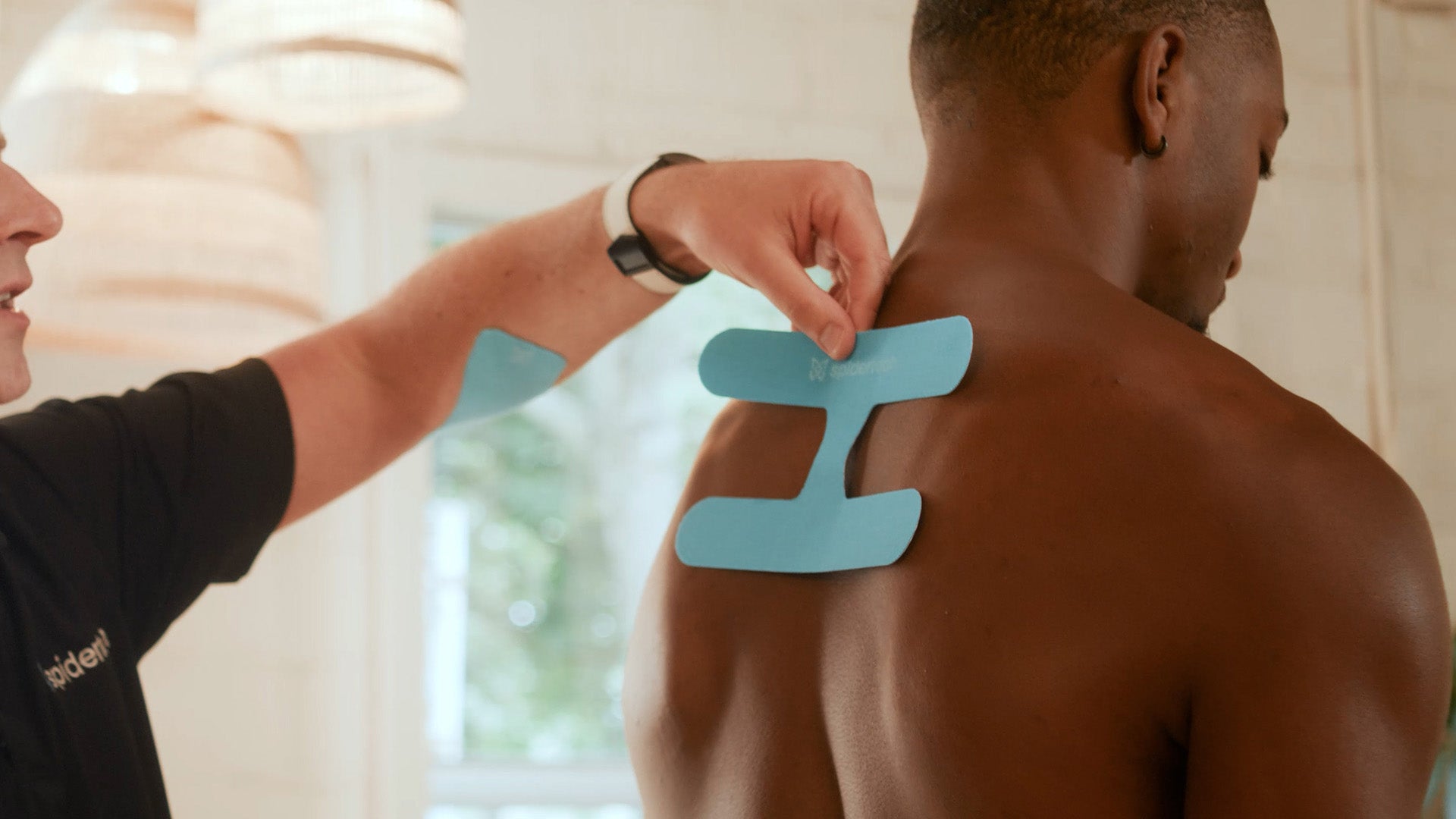
Key Takeaways
- Evidence on whether kinesiology tape changes posture is limited and mixed. Some randomized trials and pilot studies show short-term improvements in spinal alignment or shoulder posture and improved proprioception.
- Kinesiology tape can be useful as a sensory cue or postural reminder during rehabilitation and retraining, but it is not a proven long-term structural correction by itself. Combine tape with exercise, ergonomic change, and motor retraining for lasting results.
- Practical use: consider kinesiology tape as a temporary adjunct to increase awareness and assist muscle activation during targeted rehab sessions. Combine rehab and taping as the patient develops active control and strength.
Why Posture Seems Like A Logical Target For Kinesiology Tape
Posture depends on muscle balance, habitual motor patterns, and environmental factors such as workstation setup. Because kinesiology tape provides light skin tension and sensory input without restricting movement, it may act as a proprioceptive cue that increases awareness of a wanted posture or facilitates targeted muscle activation during movement. That clinical logic has led many practitioners to try kinesiology tape for forward head posture, rounded shoulders, thoracic kyphosis, and lumbar posture during rehabilitation.

What The Research Shows
The body of literature testing kinesiology tape specifically for posture contains randomized controlled trials, pilot randomized studies, and mechanistic work. The pattern is consistent: some studies find short-term effects, others find no meaningful clinical benefit beyond exercise, and long-term data are scarce.
Key findings from higher-quality trials and trials with useful clinical takeaways:
-
A randomized controlled trial testing a postural taping method designed to reduce forward head posture found short-term improvements in posture and pain immediately after application, but limited evidence for sustained structural change over longer follow up. This trial highlights the tape’s potential as a short-term behavioral cue.
-
In seated workers with rounded shoulder posture, a single-blinded randomized pilot study reported that kinesiology tape applied with stretch improved pectoralis minor length and decreased rounded shoulder measures compared with placebo taping, suggesting an immediate mechanical and positional effect when tape is applied correctly.
-
Conversely, in patients with impingement syndrome and rounded shoulder posture who performed a structured exercise program, adding repeated kinesiology tape applications did not provide additional benefit over exercise alone across a four-week program. That suggests tape may add little once a supervised exercise protocol is in place.
-
In studies of thoracic kyphosis in osteoporotic patients, postural taping produced instant reductions in kyphosis angle and short-term balance improvements, yet these benefits were generally transient and did not replace exercise as the primary long-term intervention.
-
For scapular control and shoulder kinematics, kinesiology tape has been shown to improve joint reposition sense and certain kinematic measures in people with shoulder impingement, indicating value when the clinical goal is improved movement control rather than structural change.
Taken together, the evidence supports kinesiology tape as a short-term cue or facilitator for posture and movement control but does not show it to be a reliable standalone treatment for long-term postural correction.
Why Results Are Mixed
- Difference in taping protocols. Studies vary in tape placement, tension, configuration, number of applications, and wear time. Small differences in technique can change outcomes.
- Short follow-ups. Many trials measure immediate or days-long responses. Postural re-education typically requires weeks to months of consistent loading and motor retraining, so short trials cannot establish durable change.
- Diverse outcomes. Studies measure different endpoints: spinal angle, muscle length, EMG activation, balance, or patient-reported pain and function. Improvements in one domain do not guarantee improvement in others.
- Small sample sizes. Several studies are pilot or small 'Randomized Controlled Tests' and considered underpowered for small to moderate clinical effects.
These limitations mean clinicians should interpret positive findings cautiously and prioritize multimodal rehabilitation strategies for lasting posture change.

Practical Guidance For Clinicians
-
Use kinesiology tape as a training aid rather than a permanent correction. Apply tape to provide a sensory cue during sessions where posture practice, strengthening, or motor control training occurs.
-
Be precise with application: tape tension, direction, and anchor points matter. For example, scapular-reposition taping aims to facilitate posterior tilt and external rotation of the scapula. Use protocols informed by the studies cited here.
-
Combine taping with active interventions: exercise to strengthen postural extensors and scapular stabilizers, stretching of shortened anterior tissues, ergonomic adjustments, and behavioural strategies (timed reminders, workstation setup). Taping alone rarely produces enduring structural change.
- Reassess objectively: posture photos, angular measures, muscle length tests, and functional outcomes with and without tape will show whether tape adds meaningful value for that patient. If benefits are purely subjective or short-lived, consider prioritizing exercise and ergonomics.
Bottom Line
Kinesiology tape can be a useful short-term adjunct for posture work. It provides proprioceptive cues and can assist posture awareness and movement control during rehabilitation. However, evidence for sustained, structural posture correction is limited. For meaningful long-term change, incorporate taping into a broader program of exercise, motor retraining, and ergonomic correction.
Spidertech Pro Postural is specifically designed to tackle postural issues. Save time and by clinically precise every treatment.
Learn More
Our comprehensive Skool platform covers taping techniques as well as free webinars that go over taping efficacy. Sign up for free and start taking advantage of our courses.
References:
- Short-term effects of postural taping on pain and forward head posture: a randomized controlled trial
- Kinesiology taping with exercise does not provide additional improvement in round shoulder subjects with impingement syndrome: A single-blinded randomized controlled trial
- Effects of Kinesiology Taping on Scapular Reposition Accuracy, Kinematics, and Muscle Activity in Athletes With Shoulder Impingement Syndrome: A Randomized Controlled Study
- The mechanical effect of kinesiology tape on rounded shoulder posture in seated male worked: a single-blinded randomized controlled pilot study
- An investigation into the effects of kinesiotaping for posture correction on kyphosis angle, pain, and balance in patients with postmenopausal osteoporosis-associated thoracic kyphosis
- Postural taping decreases thoracic kyphosis but does not influence trunk muscle electromyographic activity or balance in women with osteoporosis
- The effect of kinesio taping in forward bending of the lumbar spine
Share:
Spidertech Kinesiology Tape vs. Athletic Tape: What’s the Difference? What Clinicians Should Know
Spidertech Kinesiology Tape For Running Injuries: What Research Says About ITB, Shin Splints & Knee Pain