





Key Takeaways
-
Taping (rigid and elastic/kinesiology tape) has clear evidence for effectiveness in some contexts, notably acute mechanical support (rigid tape) and short-term pain relief or proprioceptive modulation (kinesiology tape).
-
Taping is less justified when used as a long-term standalone intervention for chronic musculoskeletal pain, structural correction, or passive range-of-motion gains; optimal outcomes require integration with exercise and active rehabilitation.
-
Evidence is strongest when taping is applied based on specific clinical indications, with clear goals (e.g., ligament support, ankle sprain prevention, targeted proprioceptive cues), standardized protocols, and measurable outcomes.
-
As with any intervention, clinicians should document objective baselines, incorporate patient preferences and functional goals, and reassess outcomes systematically.
As clinicians and patients continue to set goals towards the new year, physiotherapy continues to evolve with evidence-informed practices that prioritize function, recovery, and injury prevention. In this context, taping remains a widely used adjunctive tool, but its role is not universal. Some taping approaches have strong evidence in specific applications, while others are supported only by limited or low-certainty data. As you plan your interventions and treatment goals for the year ahead, understanding when taping helps and when it doesn’t ensures better outcomes, realistic expectations, and stronger patient trust.

“Taping” In Physiotherapy
In physiotherapy, “taping” refers to several distinct techniques:
-
Rigid Taping: Non-elastic tape used to provide mechanical restriction and ligament/joint support (often in acute injury or sport contexts).
-
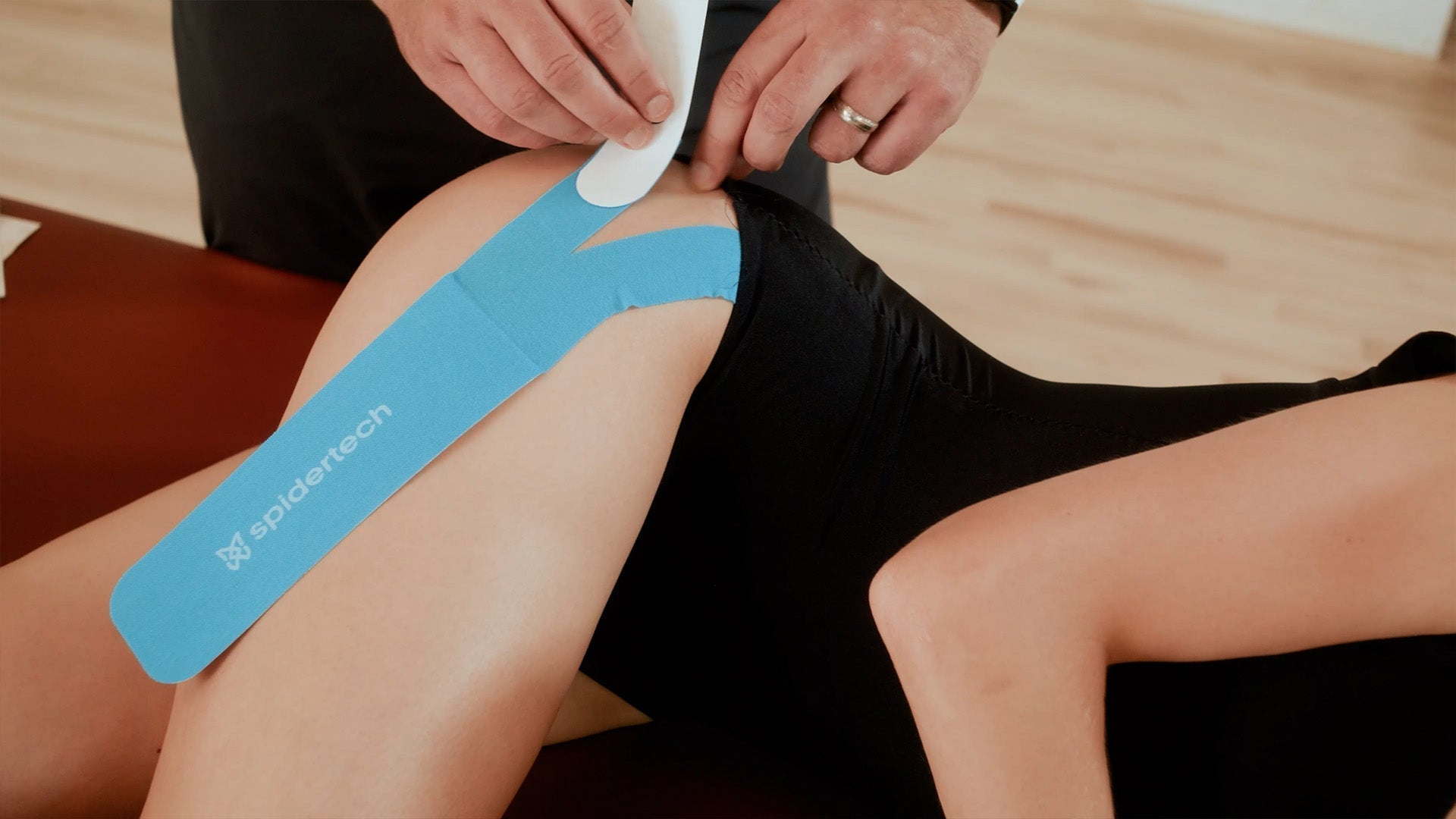
Elastic or Kinesiology Taping: Flexible, adhesive tape designed to mimic skin elasticity; used for proprioceptive input, pain modulation, soft tissue support, and mild mechanical guidance.
-
Adjunctive Taping: Combination approaches where tape supports structures as part of a broader exercise, manual therapy, or functional rehabilitation plan.
Because these techniques differ in purpose and mechanism, their efficacy varies by condition and clinical goal. The next sections explain where research supports taping and where evidence remains limited.
When Taping Helps — Evidence-Based Applications
1. Acute Mechanical Stabilization (rigid taping)
Rigid taping remains a valid tool for acute joint support and injury prevention, especially for the ankle. Studies show that non-elastic taping can reduce excessive inversion/eversion and lower the risk of recurrent lateral ankle sprains, especially in athletic populations. Bracing and rigid taping have comparable effectiveness in many cohorts.
Clinical tip: Use when joint stability is a priority (acute sprain, high-risk sport scenarios, early return to play), but pair with rehabilitation to restore strength and neuromuscular control.
2. Short-term Pain Relief & Proprioceptive Support (Kinesiology tape)
Multiple randomized trials and systematic reviews show that kinesiology tape can reduce pain and improve function in specific conditions such as shoulder pain, knee osteoarthritis, and patellofemoral pain syndrome — especially when tape is used as an adjunct to exercise. These trials consistently show short-term benefits (days to weeks), with small to moderate effect sizes.
Clinical tip: Use kite tape to augment early exercise adherence and facilitate movement when pain is limiting initial function. Always measure active outcomes rather than rely solely on subjective reports.
3. Acute Edema & Lymphatic Support
Taping with fan configurations and light tension has been studied for short-term edema control (e.g., postoperative swelling, lower limb swelling). Systematic reviews note positive but heterogeneous effects. Taping may reduce swelling faster than no tape in acute settings, but evidence is still limited and should be combined with compression and manual lymphatic drainage where indicated.
Clinical tip: Apply taping as a temporary adjunct to support manual lymphatic techniques and compression when long-term management isn’t the priority.

4. Proprioception, Motor Control Cues & Movement Facilitation
Research shows that both rigid and elastic taping can alter sensory input and proprioceptive awareness, affecting muscle activation patterns and joint position sense. This is particularly valuable when patients are learning new movement patterns, returning from injury, or re-engaging functional tasks.
Clinical tip: Use taping in early phases of neuromuscular training to reinforce proper alignment and timing, then remove as motor control consolidates.
When Taping Doesn’t Help — Where Evidence Is Weak Or Inconclusive
1. Taping As A Long-Term Standalone Intervention
Numerous systematic reviews and meta-analyses conclude that taping by itself, whether rigid or elastic, does not produce meaningful long-term changes in chronic pain, structural alignment, or passive range of motion when used alone. Benefits reported in short studies often dissipate when tape is removed or in long-term follow-ups.
Clinical implication: Taping should never replace exercise programs, behavioural interventions, or active rehabilitation strategies that have stronger long-term evidence for chronic conditions.

2. Structural Correction (Posture, Spinal Alignment)
Some clinicians use tape with the aim of structurally correcting posture or spinal curvature. Controlled trials generally show no durable structural change solely from taping. Any immediate alignment effects typically disappear after tape removal, indicating that taping does not “rewire” muscle length or posture without concurrent motor training.
Clinical implication: Combine taping with active postural education and strengthening exercises rather than expecting tape on its own to produce structural change.
3. Non-specific Chronic Pain Without Active Rehabilitation
In patients with long-standing, non-specific chronic pain states, taping alone does not reliably outperform placebo or sham taping and may merely provide transient placebo effects. Moderate certainty evidence suggests that active multimodal strategies (exercise, behavioural therapy, education) should form the core of long-term management, with tape as a temporary adjunct if it helps engagement.
Clinical implication: Reserve tape for phases where it supports function or exercise engagement; do not offer it as a long-term solution in isolation.
How To Apply Taping Effectively In Physiotherapy
Set Clear Goals
Before applying tape, define the therapeutic objective: pain reduction, proprioceptive cueing, movement facilitation, edema control, or joint support. Only proceed if a clear goal exists that aligns with available evidence.
Standardize Your Technique
Document tape type, tension, placement, and duration. Standardizing protocols in your clinic improves consistency and outcome tracking.
Track Outcomes Objectively
Use validated measures — pain scales, ROM, functional tests, strength measures, balance assessments — not just patient “feelings.” Compare pre- and post-taping outcomes to judge effectiveness.
Combine With Active Rehabilitation
Tape is rarely effective in isolation. Pair taping with exercise, manual therapy, education, and behavioural strategies for durable results.
Bottom line
Taping has a defined role in modern physiotherapy when used judiciously and evidence-informed: for acute mechanical support, short-term pain modulation, proprioceptive cueing, and adjunctive facilitation of movement practice. It is less helpful as a standalone long-term intervention for chronic pain, structural correction, or passive mobility improvement. As you set your goals for the new year, use taping to enhance active rehabilitation, track outcomes objectively, and maintain clear communication about expectations and goals with every patient.
Learn More
Our comprehensive Skool platform covers taping techniques as well as free webinars that go over taping efficacy. Sign up for free and start taking advantage of our courses.
References:
- Efficacy of kinesiology taping on the management of shin splints: a systematic review
- Effects of kinesio tape compared with nonelastic sports tape and the untaped ankle during a sudden inversion perturbation in male athletes
- Effectiveness of Kinesio tape in the treatment of patients with patellofemoral pain syndrome: A systematic review and meta-analysis
- The effect of kinesiotaping on edema: A systematic review and meta-analysis
- Effects of the direction of Kinesio taping on sensation and postural control before and after muscle fatigue in healthy athletes
- Short-term effects of postural taping on pain and forward head posture: a randomized controlled trial
- Effectiveness of Kinesio Taping in Patients With Chronic Nonspecific Low Back Pain A Systematic Review With Meta-analysis
Share:
Can Spidertech Kinesiology Tape Improve Range of Motion? What Studies Show Across Joints
7 Reasons To Incorporate Spidertech In Your Training